

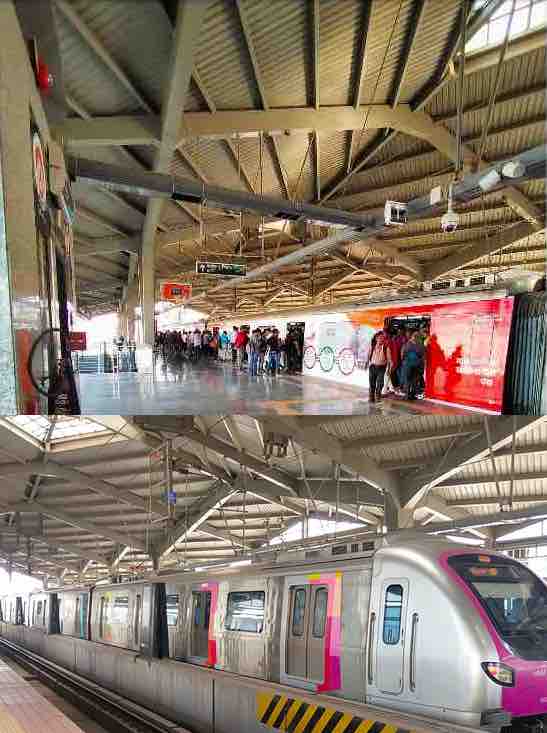
Mumbai Metro: Lines, Route Map, Fare, Time Table and Contact Details
The Mumbai Metro has grown into a real lifeline for the city. In April 2026, the network crossed the 100 km mark, making Mumbai the second city in India after Delhi to reach that milestone. With fast, air-conditioned, closed-door coaches, the Metro now offers a comfortable option next to the crowded suburban locals. This guide covers all the operational lines, the route map, fares, timings, ticket rules and contact details in simple words.
Mumbai Metro Lines Operational in 2026
| Line | Colour | Route | Length / Stations |
|---|---|---|---|
| Line 1 | Blue | Versova to Ghatkopar | 11.4 km, 12 stations |
| Line 2A | Yellow | Dahisar East to D N Nagar | 18.6 km, 17 stations |
| Line 7 | Red | Dahisar East to Gundavali (Andheri East) | 16.5 km, 14 stations |
| Line 3 | Aqua | Cuffe Parade to Aarey JVLR (underground) | 33.5 km, 27 stations |
| Line 2B (Phase 1) | Yellow | Diamond Garden to Mandale (new) | Opened 7 April 2026 |
| Line 9 (Phase 1) | Red | Red Line extension towards Mira-Bhayandar (new) | Opened 7 April 2026 |
More lines, including Line 4, Line 5, Line 6 and Line 7A, are under construction and will open in the coming years.
Line 3 (Aqua Line): Mumbai’s First Underground Metro
The Aqua Line is the biggest recent addition. It is Mumbai’s first fully underground metro, running 33.5 km with 27 stations from Cuffe Parade in South Mumbai to Aarey JVLR, and it became fully operational on 8 October 2025.
- It gives direct underground connectivity to both airport terminals, CSIA Terminal 1 and Terminal 2.
- It passes key points like BKC, Dharavi, SEEPZ and MIDC.
- From the CSMT area to the airport takes about 35 to 40 minutes, much quicker than a cab in daytime traffic.
- It uses modern QR and NCMC smart-card ticketing.
Mumbai Metro Fare Chart 2026
Metro fares are distance based and differ slightly by line. As a general guide for 2026:
| Line | Fare Range (Single Journey) |
|---|---|
| Blue Line (Line 1) | ₹10 to ₹40 |
| Yellow and Red Lines (2A, 7) | ₹10 to ₹50 |
| Aqua Line (Line 3) | ₹10 to ₹80 |
- Children below 3 years: free.
- Children 3 to 12 years: usually concessional or half fare.
- Return journey and smart card options can work out cheaper than single tokens.
- The NCMC / Mumbai1 card gives a smart-card discount and works across lines with tap and travel.
Note: Metro fares are revised from time to time and depend on the exact distance between your stations. Always check the live fare on the ticket machine, the metro app, or the station display before you travel.
Key Interchange Stations
| Station | Lines You Can Switch Between |
|---|---|
| D N Nagar | Blue Line 1 and Yellow Line 2A |
| Western Express Highway | Blue Line 1 and Red Line 7 |
| Marol Naka | Blue Line 1 and Aqua Line 3 |
| Dahisar East | Yellow Line 2A and Red Line 7 / 9 |
| Andheri | Aqua Line 3 with Lines 1, 2A and 7 nearby |
Line 1 (Blue Line) Station List: Versova to Ghatkopar
Line 1 was Mumbai’s first metro, opened in June 2014. It runs east to west across the western suburbs in about 21 minutes. Its 12 stations are:
Versova, D N Nagar, Azad Nagar, Andheri, Western Express Highway, Chakala (J B Nagar), Airport Road, Marol Naka, Saki Naka, Asalpha, Jagruti Nagar and Ghatkopar.
Line 1 acts as a major feeder to two big suburban stations, Andheri and Ghatkopar, saving a lot of travel time between the Western and Central sides.
How a Metro Station is Arranged
Each metro station is broadly divided into three levels:
- Road Level: use the staircase, escalator or lift to reach the concourse.
- Concourse Level: divided into unpaid and paid areas. Ticket counters and machines are in the unpaid area. Buy your ticket, pass security, and use the AFC gates to enter the paid area.
- Platform Level: where you board the train. There is a maximum gap of about 85 mm between the platform and the train doors.
Tickets and Smart Cards
You can travel using a token, a QR ticket, or a smart card, based on how often you travel.
- Token (single or return): a prepaid ticket between a fixed set of stations, valid for the day of purchase. After entering the paid area, you must exit at your destination within the allowed time. Tokens suit occasional travellers.
- Smart Card (NCMC / Mumbai1): a tap and travel card that saves you from queues, can be recharged, and gives a small discount. This is best for regular commuters.
- QR mobile tickets: book a QR ticket through the metro app and popular payment apps, and on some lines even over WhatsApp. Scan at the gate to enter and exit.
Ticket Issuing Machines let you buy tokens or recharge cards, and you can switch the machine language to English, Hindi or Marathi. Balance-checking terminals are available at stations to check your card balance.
Passenger Facilities
- Reserved seats for senior citizens, differently-abled passengers, passengers with infants and pregnant women.
- Facilities for differently-abled passengers including wheelchair on request, wide gates, low-level lift panels, tactile paths for the visually impaired, and reserved wheelchair spaces on trains.
- Lifts and escalators at stations, and separate toilets at many stations.
- Air-conditioned coaches with CCTV and modern safety systems.
Luggage and Conduct Rules
- You may carry limited baggage, generally up to about 15 kg, while travelling on the Metro.
- Eating is not allowed inside metro stations and trains.
- Carrying inflammable or dangerous goods is prohibited, and offences attract penalties under the metro rules.
- Bicycles are allowed with special provisions on some lines, subject to rules and peak-hour restrictions.
Metro Timings
Mumbai Metro lines generally run from around early morning (about 5:30 to 6:00 AM) to late night (about 11:00 to 11:30 PM), with trains every few minutes during peak hours. Exact first and last train timings differ by line and station, so check the official display or app for your route.
Frequently Asked Questions
How many Mumbai Metro lines are operational in 2026?
Several lines are running, including Blue Line 1, Yellow Line 2A, Red Line 7, the underground Aqua Line 3, plus new Line 2B and Line 9 Phase 1 sections opened in April 2026. The network crossed 100 km in April 2026.
Which metro line goes to the airport?
The Aqua Line (Line 3) connects directly to both CSIA Terminal 1 and Terminal 2 through dedicated underground stations.
What is the Mumbai Metro fare?
Fares are distance based, roughly ₹10 to ₹40 on the Blue Line, ₹10 to ₹50 on Yellow and Red lines, and ₹10 to ₹80 on the Aqua Line. Check the live fare before travel.
What are AFC gates?
Automatic Fare Collection gates separate the paid and unpaid areas of a station. Only passengers with a valid ticket or card can pass through into the system.
Can I eat inside a metro station?
No, eating is not allowed inside metro stations or trains.
Is luggage allowed in the Mumbai Metro?
Yes, but only limited luggage, generally up to about 15 kg per passenger.
What card can I use across Mumbai Metro lines?
The NCMC / Mumbai1 card works across lines with tap and travel and offers a smart-card discount.
Quick Summary
| Network size | Crossed 100 km in April 2026 (2nd in India after Delhi) |
| First line | Line 1 Blue (Versova to Ghatkopar), 2014 |
| Underground line | Line 3 Aqua (Cuffe Parade to Aarey JVLR), 2025 |
| Airport link | Aqua Line to CSIA T1 and T2 |
| Fare range | ₹10 to ₹80 depending on line and distance |
| Smart card | NCMC / Mumbai1 card |
| Luggage | Up to about 15 kg per passenger |
The Mumbai Metro is expanding fast, and with the airport now on the network, it has become a serious travel option for daily commuters and visitors alike. Bookmark this page, as we will keep it updated as new lines and extensions open. For suburban train information, see our Mumbai Local Train guide, and for other cities visit our Metro Railways in India page.
Which metro line do you use the most? Tell us in the comments, and we will add more route-wise tips.