

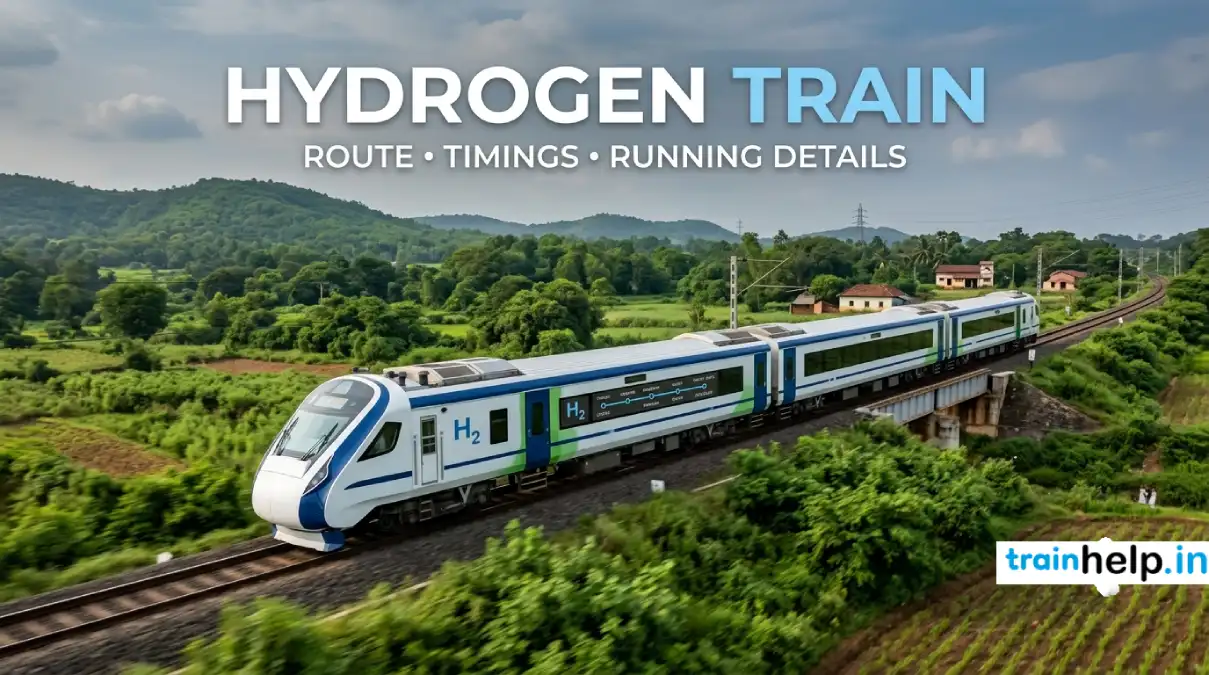
Hydrogen Train Service Details in India
A hydrogen train is an eco-friendly train powered by hydrogen fuel cells, which generate electricity by combining hydrogen and oxygen. Its only emission is water vapour, making it a clean alternative to diesel trains. These trains offer a quieter ride, cut carbon emissions, and are well suited to non-electrified routes. India is developing hydrogen-powered trains as part of its mission to promote green and sustainable transport, reducing dependence on fossil fuels while keeping regional connectivity strong.
Key Highlights of India’s Hydrogen Train
- First hydrogen train project: Indian Railways has developed the country’s first hydrogen-powered train under the “Hydrogen for Heritage” initiative.
- Route: The train operates on the Jind to Sonipat section of Northern Railway in Haryana, a distance of about 89 km.
- Purpose: The project aims to replace diesel trains on selected heritage and non-electrified routes while reducing carbon emissions.
- Technology: The train is powered by hydrogen fuel cells, which produce electricity by combining hydrogen and oxygen.
- Speed: The hydrogen train has a maximum design speed of about 110 km/h, though its actual operating speed on this route is around 75 km/h.
- Significance: India joins a small group of countries running hydrogen-powered rail, supporting the nation’s goal of greener mobility and lower carbon emissions.
The project was approved by Indian Railways and announced through the Press Information Bureau.
Benefits of Hydrogen Trains
- Zero carbon emissions, with only water vapour released
- Reduced air and noise pollution
- Lower dependence on fossil fuels
- Environment-friendly and energy-efficient transport
- Well suited to non-electrified routes where diesel is still used
India’s First Hydrogen Train Begins Regular Service
India’s first hydrogen-powered train has commenced regular operations, a historic milestone in the country’s move towards sustainable transport. Running between Jind Junction and Sonipat Junction, the train uses hydrogen fuel cell technology to offer a smooth, efficient and clean journey. With its only by-product being water vapour, the service marks a major step towards greener rail transport.
Hydrogen Train Time Table (Jind to Sonipat)
| Train No. | Route | Departs | Arrives |
|---|---|---|---|
| 74010 | Jind Junction to Sonipat Junction | 07:40 hrs | 09:40 hrs |
| 74009 | Sonipat Junction to Jind Junction | 10:40 hrs | 13:00 hrs |
Halts: Jind City, Pandu Pindara, Lalit Khera Halt, Bhambewa, Isapur Kheri Halt, Butana Halt, Khandari Halt, Gohana, Rabra Halt, Lath Halt, Mohana Haryana and Barwasni Halt.
Composition
The hydrogen train has 10 coaches, including hydrogen fuel cell based DEMU coaches. The train generates electricity onboard and emits only water vapour, making it an environment-friendly alternative to conventional diesel trains, and one of the longer hydrogen trainsets in service worldwide.
Important: This is a pilot service. If it performs well, hydrogen trains could be extended to other non-electrified routes across India under the Hydrogen for Heritage plan.
Frequently Asked Questions
Where does India’s hydrogen train run?
It runs between Jind Junction and Sonipat Junction in Haryana, a route of about 89 km under Northern Railway.
When did the hydrogen train start service?
Regular services began on 19 July 2026, shortly after the flag-off, running six days a week with no service on Fridays.
How fast does the hydrogen train go?
It has a maximum design speed of around 110 km/h, with an actual operating speed of about 75 km/h on this route.
How many coaches does the hydrogen train have?
The train has 10 coaches powered by hydrogen fuel cell technology, emitting only water vapour.