

Last Updated: July 4, 2026 | Status: Trials Underway, Launch Expected Soon
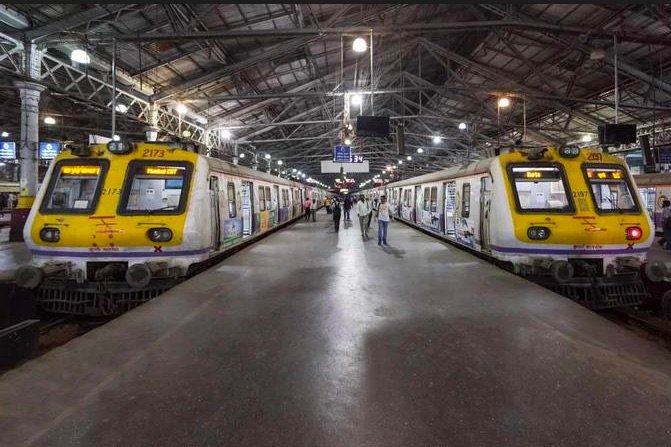
Big change is coming to the Mumbai local. For more than 150 years, the open door of a non-AC local has been part of every Mumbaikar’s daily life, and sadly, also the biggest safety risk. Now that is about to change. Mumbai’s first non-AC local train with an automatic door-closing system has arrived in the city and is expected to start passenger service soon. If you also travel on the air-conditioned services, see our full guide to the Mumbai AC local train for comparison.
Here is everything commuters need to know features, route, launch status and answers to the questions everyone is asking.
Key Features of the New Non AC Mumbai Local Train
1. Automatic Sliding Doors with Anti-Drag System The doors close automatically before the train departs — just like AC locals and Metro trains. The anti-drag system prevents the train from moving if something (or someone) is caught in the door, and prevents accidental falls from moving trains.
2. Special Ventilation Design (The Big Question Answered) The biggest worry with closed doors in a non-AC train is ventilation — and Railways has worked on exactly this. The train has louvred doors (doors with air slits) and roof-mounted ventilators to keep fresh air flowing even when doors are shut. It also has wider 1,900 mm windows – bigger than regular locals for more natural light and airflow.
3. Vestibule-Connected Coaches Coaches are connected from inside in 6-coach units, so passengers can move between coaches. This helps spread the crowd evenly instead of everyone jamming near a few doors. Each unit can accommodate up to 5,600 passengers.
4. Better Seating Stainless steel seats in second class and cushioned seats in first class.
5. Modern Safety Systems Emergency evacuation features, smoke and heat detection systems, and improved emergency communication features never seen before in a non-AC local.
What Has Happened So Far
- The first non-AC EMU rake with automatic doors was manufactured by the Integral Coach Factory (ICF), Chennai for Central Railway.
- The train arrived at Kurla car shed in April 2026 and is currently undergoing inspection and trial runs.
- The rake is numbered 268201 to 268212, a 12-car train made of vestibule-connected units.
- Before entering passenger service, the train must clear RDSO (Research Designs and Standards Organisation) certification trials, including door operation tests, obstruction detection checks and ride stability under full passenger load.
- Public rollout was targeted for around July 2026, roughly three months after the trials began. The official launch date announcement from Central Railway is awaited, and this page will be updated as soon as it comes. For the latest developments, follow our Mumbai local train news updates.
- The first trials and services are expected on the CSMT to Kalyan corridor, one of the busiest stretches of the suburban network. You can find timings and more on our Mumbai local train hub.
Why This Train Was Needed
The numbers tell the story. Mumbai’s suburban network carries over 75 lakh passengers daily across 2,300+ services. Overcrowding and travelling on open doorways led to more than 2,200 deaths in 2025 alone roughly 6 to 10 lives lost every single day.
The turning point was the tragic Mumbra incident of June 2025, when passengers travelling on the footboard of overcrowded trains fell and lost their lives. After that, the Railway Board made it mandatory that all new non-AC suburban rakes must have automatic door closure and improved ventilation. This train at Kurla is the first result of that decision — and the model for hundreds of rakes that will follow.
What Commuters Are Saying
Honest picture reactions are mixed, and both sides have a point.
Supporters say: Closed doors will finally stop deaths from falling off trains, the single biggest killer on the network. If it works, it changes Mumbai local travel forever.
Sceptics ask: Will ventilation really be enough in a jam-packed coach during May heat or a humid monsoon evening? And will automatic doors slow down boarding at stations like Dadar and Thane, where thousands get in and out in 20–30 seconds?
These are exactly the questions the RDSO trials are testing — door timing, ventilation under full load and ride behaviour. The real answer will come in the first few weeks of passenger service.
Summary Table
| Feature | Details |
|---|---|
| Train Type | 12-car Non-AC EMU (rake 268201–268212) |
| Manufacturer | Integral Coach Factory (ICF), Chennai |
| Zone | Central Railway |
| Doors | Automatic sliding doors with anti-drag system |
| Ventilation | Louvred doors + roof-mounted ventilators + 1,900 mm wide windows |
| Seating | Stainless steel (Second Class), Cushioned (First Class) |
| Safety | Smoke/heat detection, emergency evacuation systems |
| Current Status | RDSO trials at Kurla car shed |
| Expected Launch | Around July 2026 (official date awaited) |
| Expected Route | CSMT – Kalyan |
This train is not just one new rake, it is the beginning of the biggest safety transformation in the history of the Mumbai local. Bookmark this page, we will update it the moment Central Railway announces the launch date and timetable. In the meantime, if a maintenance block or disruption affects your route, check our major train blocks page and the weekly Mumbai Mega Block update before you travel. For any onboard emergency, keep the railway helpline number 139 handy, and see how to get medical help on a train.
Would you prefer closed doors with ventilators, or the traditional open-door local? Share your honest opinion in the comments — Mumbai’s commuters deserve a voice in this change.